
Junk Removal or Demolition? How Knoxville Homeowners Can Tell Which One They Need
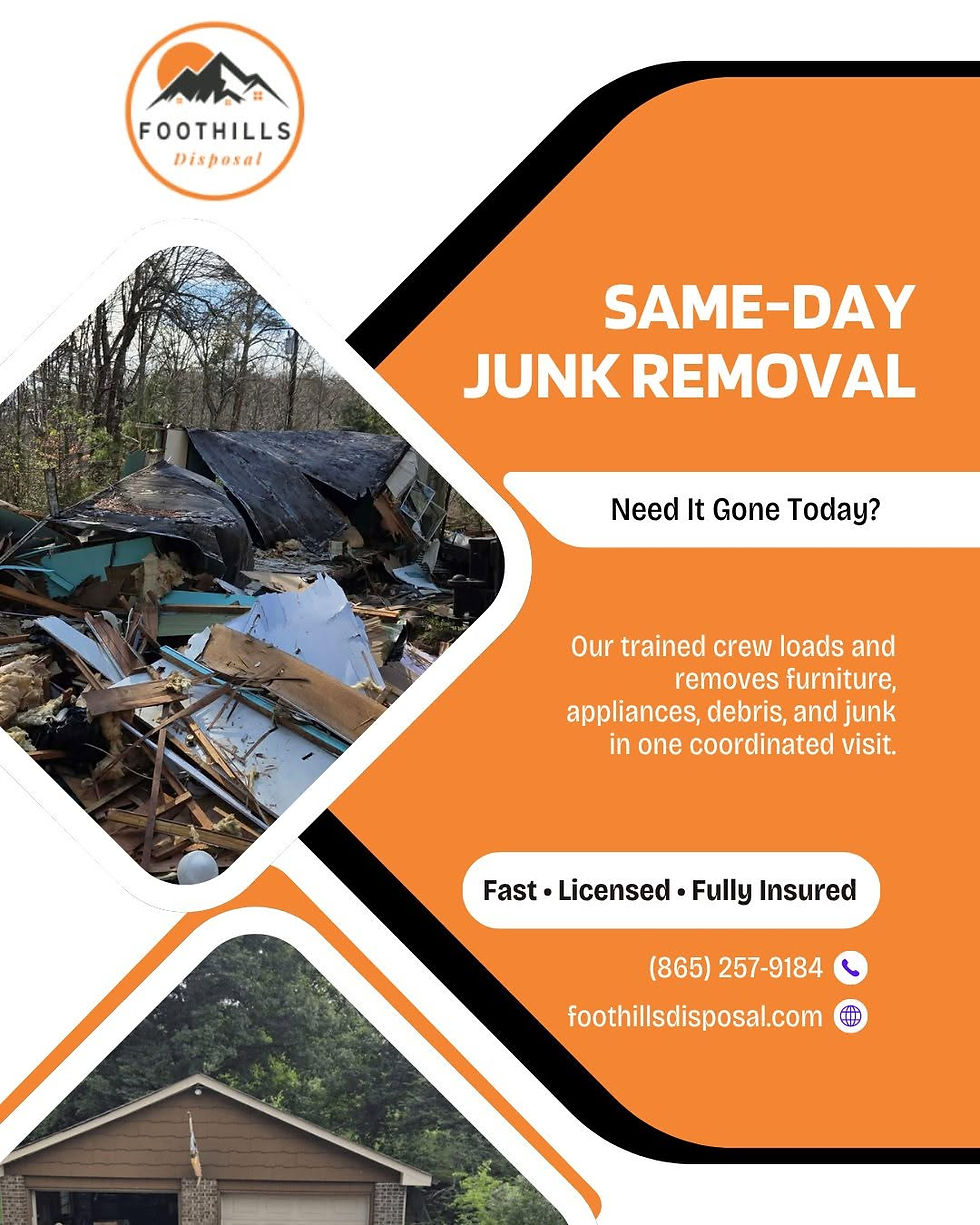
A surprising number of calls to junk removal and demolition companies in the Knoxville area start with the same uncertain framing: "I'm not totally sure which service I need." That's a completely reasonable place to start from — the line between the two categories isn't always obvious from the homeowner's side, even though it's very clear from the contractor's side. Getting it right before you call around saves you time and gets you a more accurate quote on the first attempt.
The Basic Distinction
Junk removal covers the hauling away of items and materials that don't require any structural work to remove — furniture, appliances, general household clutter, yard waste, construction leftovers that are already loose and bagged or piled. It's fundamentally a labor-and-hauling service: a crew loads what's there and takes it away.
Demolition covers the actual dismantling of a structure or fixed installation — a shed, a manufactured home, a deck, an in-ground hot tub, a concrete patio. It requires tools and often equipment to break the structure down before the resulting debris can even be hauled, and it frequently involves permitting, utility disconnection, or hazardous material considerations that simple junk removal doesn't.
Where People Usually Get Confused
The gray area shows up most often with items that are heavy, semi-fixed, or partially attached to a property — an old above-ground pool that's falling apart, a rotted deck that's structurally unsound, a shed that's leaning but technically still standing, a hot tub that's plumbed into the house's electrical and water systems.
These situations usually need demolition-level handling even though they might feel, at a glance, like "just a big junk removal job." A junk removal crew showing up expecting to load loose items isn't equipped — legally or physically — to safely disassemble a structure with embedded electrical connections or structural framing. Being upfront about what you're actually dealing with when you call gets you routed to the right service and the right quote the first time.
Why Getting This Right Matters for Your Quote
Pricing structures differ meaningfully between the two categories. Junk removal is typically priced by volume — how much space your items take up in a truck — and by material type, since some categories (electronics, certain appliances, tires) carry separate disposal fees. Demolition is priced around the scope of the teardown itself: structure size, equipment needs, permit requirements, and disposal volume once the structure is broken down.
Requesting a junk removal quote for what's actually a demolition job (or vice versa) usually means a second phone call, a second site visit, and a delayed timeline — all avoidable by describing the actual physical situation clearly on the first call. If you want a general sense of what drives cost across both categories in the Knoxville market, our complete guide to junk removal costs and services breaks down the variables in more detail.
A Practical Way to Self-Diagnose Before You Call
A simple test that works for most borderline cases: if you could physically pick the item up (with help) and carry it to a truck without cutting, unbolting, or breaking anything, it's junk removal. If it's attached to the ground, plumbed, wired, or would require tools to reduce it to movable pieces, it's demolition.
Applying that test to common Knox County scenarios: an old couch, a broken refrigerator, a pile of yard debris — junk removal. An old shed, a hot tub, a concrete slab, a manufactured home — demolition. A large deck that's detached enough to break apart by hand in sections — often junk removal, though a badly rotted or structurally unstable one may need demolition-level care for safety reasons.
When a Single Project Needs Both
Plenty of real projects genuinely need both services in the same visit — clearing out the contents of a house before a demolition begins, for instance, or hauling away general debris alongside a shed teardown. A company that offers both demolition and junk removal services in Knoxville under one roof can scope a combined project without you having to coordinate two separate vendors and two separate schedules.
This combined approach is especially common with estate clean-outs, foreclosure properties, and renovation projects, where the property might have a mix of loose junk, damaged furniture, and one or two structures that genuinely need to come down.
How Crews and Equipment Actually Differ Between the Two Services
Part of why misrouting a call matters so much comes down to what actually shows up on the day of service. A junk removal crew typically arrives with a truck, basic hand tools, moving equipment like dollies and straps, and a team sized for lifting and hauling — not for cutting, prying, or structural disassembly. Their training and insurance coverage are built around safe lifting and hauling, not structural work.
A demolition crew, even for a relatively small job like a single shed, typically arrives with a different equipment set: reciprocating saws, pry bars, sometimes a skid steer or mini excavator depending on scope, and often a second vehicle for hauling debris separately from equipment transport. Their insurance coverage is structured differently too, since structural demolition carries different liability considerations than moving and hauling loose items.
This is why a company showing up expecting one type of job and discovering it's actually the other can't simply improvise — the crew, equipment, and insurance coverage on-site that day are matched to what was originally scoped, and structural work performed by a crew and policy meant for hauling creates real liability exposure for the company and, indirectly, for the property owner.
Real Examples From Recent Knoxville-Area Calls
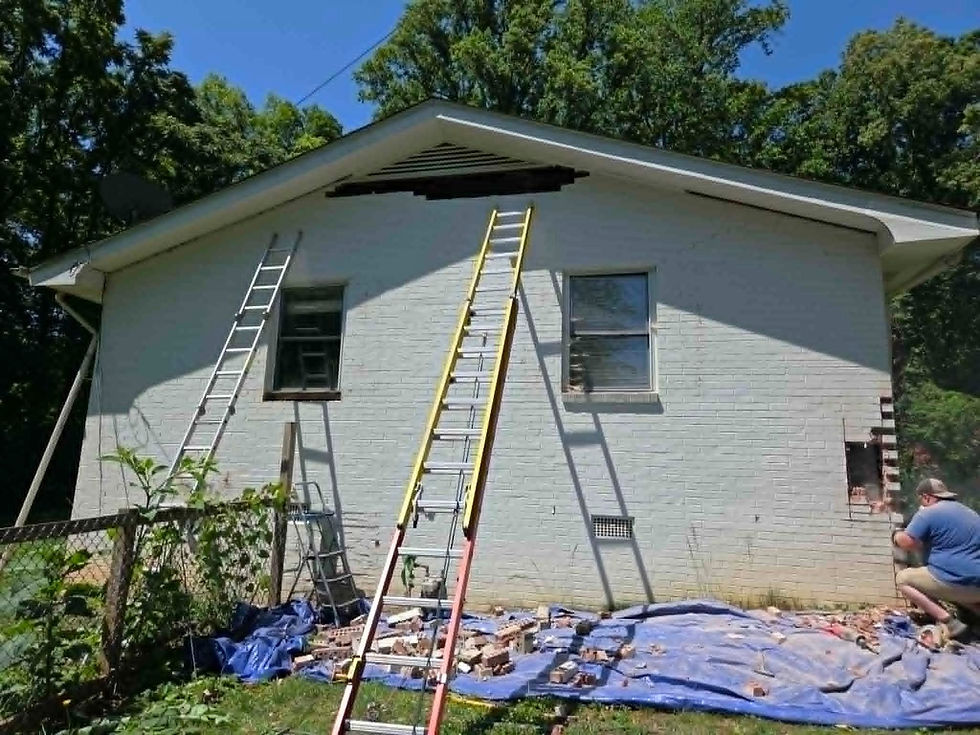
A few real-world patterns illustrate the distinction well. A homeowner clearing out a relative's garage — full of furniture, tools, and boxes — is a straightforward junk removal call, since nothing in that scope requires cutting or structural work. A homeowner with the same garage, but where the structure itself is a leaning, partially collapsed outbuilding rather than an attached garage, is a demolition call, regardless of how much "junk" might also be inside it.
A landlord clearing a rental property after a tenant move-out, with furniture and trash left behind, is junk removal. The same landlord dealing with a rotted deck a previous tenant built without a permit, now structurally unsound, is looking at demolition. An investor prepping a lot for resale who needs an old above-ground pool with an intact liner removed is closer to demolition than junk removal, since the pool structure itself, not just its contents, needs to be broken down and hauled.
What Happens If You Call the Wrong Type of Service First
Calling the wrong category isn't a major problem, but it typically costs you a day. A junk removal crew that arrives and discovers the job is actually a demolition scope will generally decline to proceed with the structural portion, both for insurance reasons and because they may not have the right equipment on the truck that day. The visit isn't wasted if there's also genuine loose-item removal involved, but the structural piece will need rescheduling with the right crew and equipment.
The fastest way to avoid this is exactly what we covered above: describe the physical situation in plain terms when you first call, rather than describing it in terms of what service you assume you need. "It's an old shed that's falling apart" gets you routed correctly far more often than "I need some junk hauled away" when what's actually involved is a structure, not just its contents.
How Insurance Claims Interact With Junk Removal vs. Demolition
If your situation involves an insurance claim — storm damage, a burst pipe, fire damage — the junk removal versus demolition distinction becomes even more important to get right from the start, since insurance documentation requirements often differ between the two categories. Damaged contents being hauled away as part of a claim are typically documented and handled as a junk removal or contents-removal line item, with itemized records of what was removed supporting the contents portion of a claim.
If the damage is severe enough that a structure itself — a garage, a shed, a portion of a house — needs to come down rather than just be repaired, that shifts into demolition territory, which may involve its own permit and, depending on your policy and the cause of damage, a different claims process entirely. Insurance adjusters generally want to see these two categories kept clearly separate in documentation, since contents and structure are frequently covered under different parts of a policy with different valuation methods.
Working with a company that understands this distinction, and that can provide the kind of documentation an adjuster expects for each category, saves real friction during what's often already a stressful claims process. It's worth mentioning upfront, when you first call, that a claim is involved, so whoever answers can make sure the right documentation practices are followed from the very first visit rather than being reconstructed after the fact.
Quick-Reference Scenarios for Common Knox County Situations
A few additional borderline scenarios come up often enough to be worth addressing directly. An old above-ground trampoline frame that's rusted and partially collapsed: generally junk removal, since it can be disassembled with basic tools even if it takes some extra effort. A fallen or storm-damaged tree that's taken out a section of fence: this typically splits into two categories — tree and limb removal is often handled by a tree service, while the damaged fence section itself may fall under either junk removal or light demolition depending on how it's constructed.
An old, detached carport with a failing roof: usually demolition, since it's an attached structure requiring disassembly rather than simple hauling. A stack of construction materials left over from a renovation, still loose and unassembled: junk removal, provided nothing needs to be broken down first. When genuinely unsure, describing the item's current physical state — standing, attached, structural, versus loose, movable, unattached — is consistently the fastest way to get routed correctly on the first call, regardless of what specific category the item falls into. It also helps to mention the item's approximate age and any visible deterioration, since a company fielding the call can often make a confident judgment call from those few details alone, without needing to schedule a separate in-person assessment just to classify the job correctly.
The Bottom Line for Getting an Accurate First Quote
When you call, describe what you're dealing with in plain terms: is it loose, movable stuff, or is it attached to the property in some way? Mentioning specific details — "it's an old above-ground pool with the liner still full of water" or "it's a shed that's leaning to one side" — helps whoever answers the phone route you to the right service and give you a realistic quote without a wasted site visit.
Foothills Disposal handles both categories across the Knoxville area, and if you're genuinely unsure which one applies to your situation, describing the property over the phone is usually enough for an experienced team to tell you which service — or which combination — actually fits.
None of this requires you to become an expert in demolition versus junk removal classification before you're allowed to call for help — that's genuinely the company's job, not yours. What actually matters on your end is simply being descriptive and honest about the physical situation rather than pre-guessing which category it falls into and potentially routing yourself to the wrong service. A quick phone conversation, with a few honest details about size, attachment, and condition, consistently gets Knoxville homeowners to the right answer faster than trying to research the distinction themselves beforehand, and it means the crew that eventually shows up arrives with the right tools, the right insurance coverage, and the right expectations for the job in front of them.


Comments