
Mobile Home Removal in East Tennessee: What You Need to Know Before You Start
The decision to remove a mobile home from a property in East Tennessee rarely happens quickly. In most cases, it follows years of watching the structure deteriorate — foundation blocks shifting, windows fogging, skirting panels cracking — while the property owner wrestles with the cost, the logistics, and the emotional weight of what tearing it down actually means. For some, the mobile home is a rental unit that finally became too damaged to lease. For others, it is a family home that has outlived its useful life. For real estate investors, it is often an asset on a lot worth far more without the structure than with it.
Regardless of the circumstances that brought you to this decision, the removal process for a manufactured home in Tennessee involves more steps, more permits, and more specialized expertise than most people anticipate when they first start researching it. This guide covers the full process from identifying the right time to act through the final site restoration after demolition — giving you the information you need to move forward with confidence.
One of the first places many Tennessee property owners look when they begin the research process is a detailed guide to the warning signs that your mobile home should be removed. Understanding the specific structural, mechanical, and regulatory thresholds that signal a manufactured home has reached the end of its useful life helps you make the decision with clarity rather than ambiguity, and it helps you communicate the condition of the structure accurately when you begin requesting demolition quotes.
How Mobile Home Demolition Actually Works
Once the decision is made, the most important next step is understanding what the demolition process actually looks like — because it differs significantly from the demolition of a site-built home.
The process begins with utility disconnections. Before any physical demolition can begin in Tennessee, all utility connections to the structure must be formally severed. This typically means an electrical disconnect by a licensed electrician, water and sewer disconnection by a licensed plumber, and gas line capping if the home was connected to propane or natural gas. These disconnections must be documented before the demolition permit will be approved in most Tennessee counties.
If the home was built before 1980, a hazardous material survey is typically required before demolition begins. A certified inspector evaluates the structure for asbestos-containing materials in floor tiles, ceiling tiles, exterior siding, pipe insulation, and roof coatings. If asbestos is found, a licensed abatement contractor must remove and properly dispose of those materials before general demolition can begin. This adds time and cost but is legally required and non-negotiable.
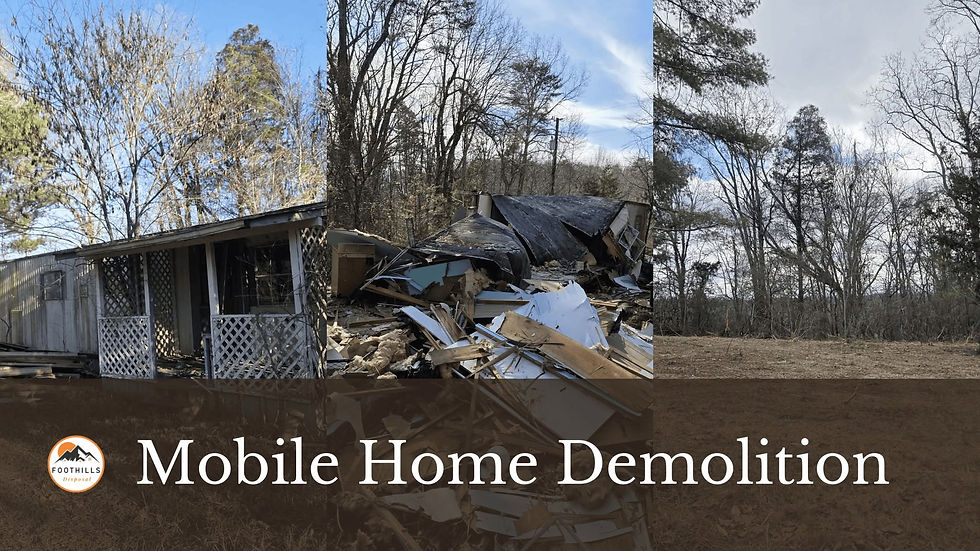
After utility disconnections and hazardous material abatement are complete, the physical demolition can begin. Professional mobile home demolition and removal services in Knox County typically use a combination of an excavator and a skid steer to efficiently break down the structure, separate materials by category, and load debris into trucks for transport. The steel chassis is typically the last element to be dealt with — cut into sections that can be handled by a flatbed truck and transported to a metal recycler.
The permit process varies by location in Tennessee. Knox County requires a demolition permit displayed on site during the work. Some municipalities also require a notification letter to neighboring property owners before certain types of demolition begin. Your demolition contractor should be familiar with all local permit requirements and should either handle the permit application on your behalf or clearly explain which steps are your responsibility as the property owner.
What Does Mobile Home Demolition Cost in Knoxville?
Cost is typically the first and most pressing question for property owners who have decided to move forward. The answer is genuinely variable, because mobile home demolition involves several different cost components that depend on factors specific to your property and your structure.
The base demolition cost — the excavator work, the labor, and the basic debris hauling — varies based on the size of the structure, the condition of the site (equipment access matters significantly), and the local market rate for demolition labor. A single-wide manufactured home generally costs less to demolish than a double-wide, and a double-wide that has been partially modified with an attached addition costs more than a standard unit.
Added to the base demolition cost is the disposal cost, which in East Tennessee is partly driven by landfill tipping fees for construction debris. These fees vary by material type and by specific facility. Metal that goes to a recycler does not incur a tipping fee — it may actually generate a small credit — but wood, drywall, insulation, and other mixed materials do.
If hazardous materials are present, abatement adds a separate cost layer that varies based on the extent of contamination. A detailed 2026 Knoxville mobile home demolition cost guide gives you specific ballpark figures for each component, which allows you to set a realistic budget and evaluate contractor quotes against an informed baseline rather than accepting the first number you receive.
One way to manage costs is to coordinate the metal recycling revenue against your demolition invoice from the start. Ask any contractor you are considering whether they credit the recycling value of the steel chassis and metal components against the total bill or keep it as profit. The best contractors are transparent about this, and those who credit it are often more competitive in their total pricing.
How Long Will the Project Take?
One of the most frequently asked questions from property owners in the planning stage is how long the project takes from start to finish. The full timeline is longer than most people expect, primarily because the pre-demolition steps — permits, utility disconnections, hazardous material surveys, and abatement if needed — can take several weeks before a single piece of equipment arrives on site.
A typical project timeline in Knox County looks roughly like this: pre-demolition research and contractor selection, one to two weeks; permit application and utility disconnect coordination, one to three weeks; hazardous material survey, one to two weeks from inspection scheduling to report delivery; abatement if required, typically one to three days of actual work but scheduling may add one to two additional weeks; physical demolition, one to two days for a single-wide and two to three days for a double-wide; post-demolition site grading and final inspection, one to three days.
Understanding how long a Tennessee mobile home demolition project actually takes from permit to cleanup helps you plan accurately and set appropriate expectations for lenders, buyers, or other parties who are waiting on the property. Budgeting four to eight weeks for the full process, start to finish, is realistic for most Knox County projects with no unusual complications.
Other Structures to Consider at the Same Time
If you are demolishing a mobile home on a property that also has a detached shed, barn, or other outbuilding in poor condition, it is almost always more cost-effective to address those structures at the same time rather than scheduling a separate project later. Mobilizing a demolition crew involves equipment transport costs that are incurred regardless of how much work is done once the crew arrives. Adding a shed or small outbuilding to an existing mobile home demolition project typically adds relatively little to the total cost compared to scheduling it separately.
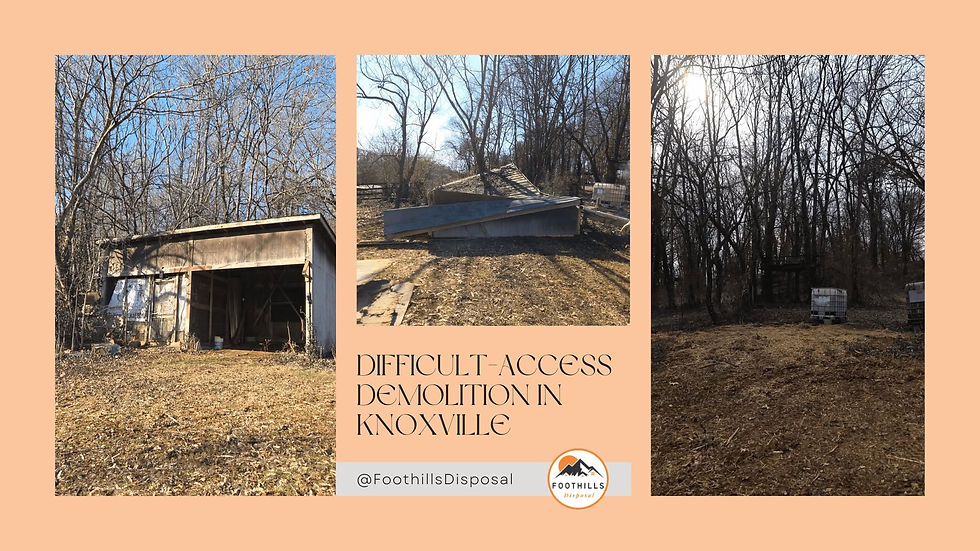
Barns and large outbuildings on East Tennessee properties come with their own set of complications. Older barns often have fragile roof structures that require careful shoring before demolition begins to prevent uncontrolled collapse. Tin roofing on older barns is frequently rusted through and can shift unexpectedly during teardown. And barnyard areas often contain buried debris, old fuel tanks, and agricultural waste that need to be addressed separately from the structure itself.
For properties with significant outbuildings beyond the mobile home, professional barn demolition and outbuilding clearance services that specialize in East Tennessee farmstead and rural property clearances bring the right equipment, experience, and safety protocols to handle complex multi-structure demolition projects efficiently.
The most important thing to know about mobile home removal in East Tennessee is simply this: it is a manageable process when approached with the right information and the right partners. It takes longer than it looks, costs more than most people initially expect, and requires more coordination between multiple service providers than a standard household junk removal. But for the property owners who complete it, the result — a cleared lot with documented, legal demolition and clean title history — is enormously valuable regardless of what they plan to do with the land next.


Comments